Tramp Is a Powerful Women's MMA Drama That Rivals Bruised and Christy
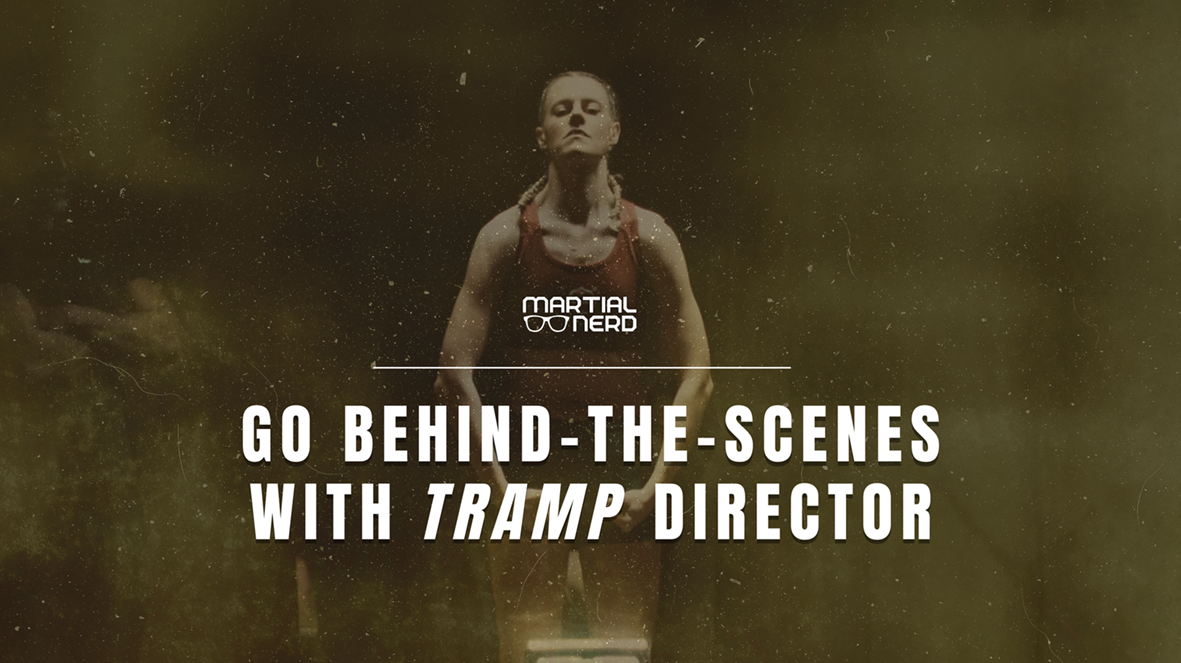
Women’s MMA gets a bad rap, but it shouldn't. EMC Productions' feature film, TRAMP (2026), provides an empathetic look at British-Polish fighter Grazyna Jarzynowska’s rocky professional journey. Grazyna experiences suffering, setbacks, losses, and redemption. But this isn’t your typical MMA movie.
Philip James McGoldrick does an excellent job at setting the tone and building an engaging atmosphere. The MMA fight choreography is realistic and filmed from close up which adds to the gripping feel of the film.
Pre-Screening First Impressions
With a pre-screener runtime over 2 hours, TRAMP doesn’t drag on or dawdle in unnecessary fluff. It gets right to the point and doesn’t let go until the ending. At which point it lets us off a little bit too gently considering the intense build up.
The soundtrack features a mix of Polish hip hop, atmospheric vocal tracks, and original electronic compositions from Marina Elderton. The film's Sound and Music Departments deserve a round of applause. The thoughtful audio mixing and sound editing enhances the believable script. It's a script that proves the movie production cast did their homework.
Stay Locked In With Grazyna
Some fight movies wander away from the core elements they were built around, but TRAMP stays focused. The pacing of the scenes keeps you locked in and curious to see what’s waiting around the next corner.
Watch It Here

There is a level of realism throughout the film that makes you forget you’re watching a movie that isn’t backed by a 50 million dollar budget and “all-star” cast of familiar faces. That being said, TRAMP isn’t for the faint of heart, as there are a few scenes that may be too disturbing for some viewers.
Go Behind-The-Scenes with Philip James McGoldrick
At Martial Nerd, we were invited to watch the film before its official release date. We also had the opportunity to interview Executive Producer and Creative Director, Philip James McGoldrick, to get his behind-the-scenes take on the film. *This Q&A may contain mild spoilers.
How did you decide to cast Izabella Malewska as the main character?
There was a time when I was developing a short film-I was looking for 35mm film and, through a friend, got in touch with Tristan Chenais, who would eventually become the cinematographer for Tramp. At the time, we didn’t know we’d be working together long-term. When we first spoke on the phone, we connected over our mutual interests and the project I was planning, and we decided to meet in person.
When we met, Tristan brought his girlfriend, Izabella Malewska, along. We started talking about potential collaboration, and I had seen something on their Instagram-a short film they had done together where Isabella had braided hair. For some reason, that image clicked for me. It sparked the idea that I could do something powerful with her, something that explored mental health and female experiences in MMA. I pitched a short story idea, and they liked it, so we began developing the project together. I wrote, Izabella gave feedback, and it became a collaborative process.
After a while, I realized that I had made many short films, and perhaps I should take a risk. I’d always thought I’d make a feature in my early twenties, but I was well into my 30s. This felt like my chance. So I pitched again to Tristan and Isabella to make it a feature on a very low budget. They agreed- they’re a very adventurous, creative couple-and we decided to go for it. Tristan handled cinematography, Isabella took the lead role, and I directed.
Along the way, the story evolved. My wife, who was producing, was pregnant, and that influenced the narrative. She gave me pointers that I incorporated, which ultimately shaped the story even more. And that’s how it all came together- through collaboration, chance meetings, and a shared willingness to take a risk.
Did the casting process involve any vetting of MMA skills?
No, we really went into the process blindly. When we decided to make Tramp a feature, it was only about a month before the first shooting date. The reason? Out of nowhere, we had an opportunity to shoot in a real MMA octagon, and we didn’t want to let it slip.
Izabella had never fought before-she didn’t even know what fighting was all about. She started kickboxing lessons twice a week, and at first, that was all it was: just kickboxing, no grappling, jiu-jitsu, or other martial arts. As we got closer to the training dates, we cast her antagonist, Ruqsana Begum, a world champion kickboxer and recently also a world champion boxer.
Their first training session together was intense. Ruqsana didn’t hold back-she really went for it-so it exposed all of Izabella’s weaknesses. It was intimidating, especially for her first scene. But the dynamic became fascinating: Rukhsana had always wanted to act, and Izabella was teaching her how to perform in front of the camera, while Ruqsana was teaching Isabella how to fight. It became a mutual learning process.
As we went deeper into training, Isabella also learned grappling and jiu-jitsu through very grassroots methods. Our 1AD George Graham (also a director) is a blue belt level Jiu Jitsu grappler. We had martial arts experts among our extras and secondary actors, and I also drew on my own experience-I’d done kickboxing, judo, and aikido-but mostly I knew MMA from watching it obsessively. The actor Michał Wlodarczyk, who plays Isabella’s brother, was the real expert. He transitioned into MMA as a child actor and later almost became a professional fighter. He led much of the fight choreography.
So it was really a collaborative effort-teaching Izabella how to fight, making the scenes look realistic, and using all the creative means we had to make it work.
Was the main character hesitant to shoot the NSFW scene in the hospital?
Absolutely not. Izabella had no problem with those scenes at all-in fact, she approached them very naturally. For the labor scenes, with all the heavy breathing, pain, and messiness, she quietly researched and asked a lot of questions. She even consulted my wife, who had already gone through childbirth once and then delivered our second son during the last shooting days, so there was a lot of real-life input.
Our goal was to show childbirth as realistically as possible. Cinema usually romanticizes it, but the truth is, it’s messy: people can give birth standing up, there’s defecation, vomiting-it’s a very physical, chaotic ordeal. We wanted to show that honestly, and it created an interesting contrast in the film when the brother is in the room, reacting as someone completely unprepared for it.
Honestly, the fighting scenes were far more intimidating for Izabella than any of the hospital sequences.
Were any professional fighters involved with the fight choreography?
Yes, we had several professional fighters involved. Ruqsana Begum, a world champion kickboxer and boxer with two world titles, was part of the choreography. We also had Ruthless Nelson, a three-time world champion kickboxer in WAKO-a specific kickboxing organization.
Michal Wlodarczyk, who plays the brother, wasn’t a professional, but he had extensive amateur fighting experience, trained with some Polish UFC fighters, and was very knowledgeable about MMA techniques. We also had Nathan Jones, known as Mr. Bag and Tag, a professional fighter who, at the time of shooting our first MMA fight, was actually competing for a belt at a FightStar event in Crystal Palace. UFC superstar Michael Venom Page, a close friend of Ruth's, appeared at the private premiere in support of the film, which was a nice surprise! However he wasn't actually involved in the making of it.
We also receive support behind the scenes, from female fighters with children, including Cindy Dandois from Belgium who was a big inspiration for Tramp.
In addition, we had several amateur fighters, some with professional experience, among the extras. Ali Wilson and Julian Gilmour were extras who turned out to be MMA and Kickboxing instructors. They all helped make the fight scenes look realistic and grounded in real MMA practice.
What kind of budget did you and your team have to work with to bring this engaging project to life?
Our budget was extremely small-we made the entire film for less than £50,000. A lot of people volunteered their time for free, so it was very much a micro-budget, guerrilla-style production. We threw ourselves into it completely, and while the film may look expensive on screen, it definitely wasn’t.
Filming often felt like being in a war zone-London’s high cost of living, inflation, and interest rates made every day a challenge. We had to be creative, think on our feet, and constantly adjust schedules. We didn’t shoot everything in one go; it was done in parts, which added to the intensity. By the end, we were all exhausted, but it was an incredible, hard-earned process.
Who designed all of the OCTAGON Fightwear clothing that is prominent throughout the film?
Octagon Clothingwear is a real company-a genuine MMA-focused brand that sponsors several Polish athletes across MMA, kickboxing, and boxing. They operate out of Poland and the UK, and they were incredibly generous in sponsoring our film, providing clothing and branding throughout the project. Special shout out to Patryk Fabiszewski, who really went out of his way to support us!
I’m really pleased you’ve noticed their contribution because they were fantastic to work with. The brand’s identity really resonated with the film, especially with its British-Polish themes, and it felt like a natural fit for the world we were creating on screen.
As a film director, what is your least favorite part of the process, whether that be during pre-production, filming, or post?
My least favorite part is the waiting-the uncertainty between projects. Filmmaking is constantly about selling yourself and your story: convincing people that you’re capable, that the project is worth pursuing, and dealing with rejection week after week. It’s mentally exhausting and really hardens you. When you see people complain about smaller setbacks, it can be hard to relate to because in filmmaking we experience knock-backs constantly. It's a tough, unforgiving world-not for everyone, perhaps similar to MMA. Persisting through that uncertainty is challenging, and being the underdog is never easy.
As for the process itself, pre-production is essential but not always fun-I don’t enjoy storyboarding or shortlisting; it feels a bit tedious, though you can’t make a good film without it. Production is where I thrive-it’s like being in the flow, fully immersed in creating. Post-production, on the other hand, is tough for me. I’d rather hand it over to someone else, honestly, but you have to find ways to enjoy it.
What is your favorite part of the process?
My favourite part of directing is the magic of seeing something come to life on screen. It is one of the most powerful experiences you can have. Any endeavour where you can take an idea from your mind and bring it into the physical world while entertaining people is incredibly fulfilling. My favourite part is not only seeing it come to life and being excited by it myself, but also seeing other people being delighted by it.
Did you study behind-the-scenes MMA content and real professional fights to help the script writing process? We really appreciate the realism!
Thank you! That means a lot, because we were really focused on achieving realism. The initiative to make the film came from wanting to say something meaningful about female mental health in high-level sports whilst also addressing reproductive challenges, but also to do something I know and love naturally. I’ve always enjoyed watching MMA, so creating a realistic setting came fairly naturally to me.
Most of my research was focused on birth, pregnancy, and the female aspects of the story. In terms of recreating a realistic fight setting, I didn’t have to put in much extra effort. I already knew the basics-flying knees, guillotines, armbars-and working with someone showing me how it looks in real life during choreography made it easy to direct it convincingly. Of course, there are important details only seasoned pro's know, and I am sure top level professionals will notice some flaws, however I think the realism is convincing enough :) It was a combination of existing knowledge and sharpening it for the camera.
We’re probably not the first publication to ask this question, but will there be a sequel?
We have definitely been thinking about a sequel, and it’s a really exciting idea. All we need is an investor or financier to come on board, and it will likely have to be an American one, since the story would ideally be set in the U.S. There are ongoing conversations, but we don’t yet know who will fund it. For now, we’re leaving it up to the universe, and we’ll jump on the opportunity if it comes.
Watch TRAMP Online Today
We'd like to thank Philip and the rest of the cast and crew that contributed to the success of TRAMP.
Watch It Here
Support independent filmmaking and stream this powerful women's MMA drama today. We hope you got as much value out of this interview as we did! Keep your fingers crossed for the sequel!